
Our own worst enemy
We are our own worst existential risk, not AI

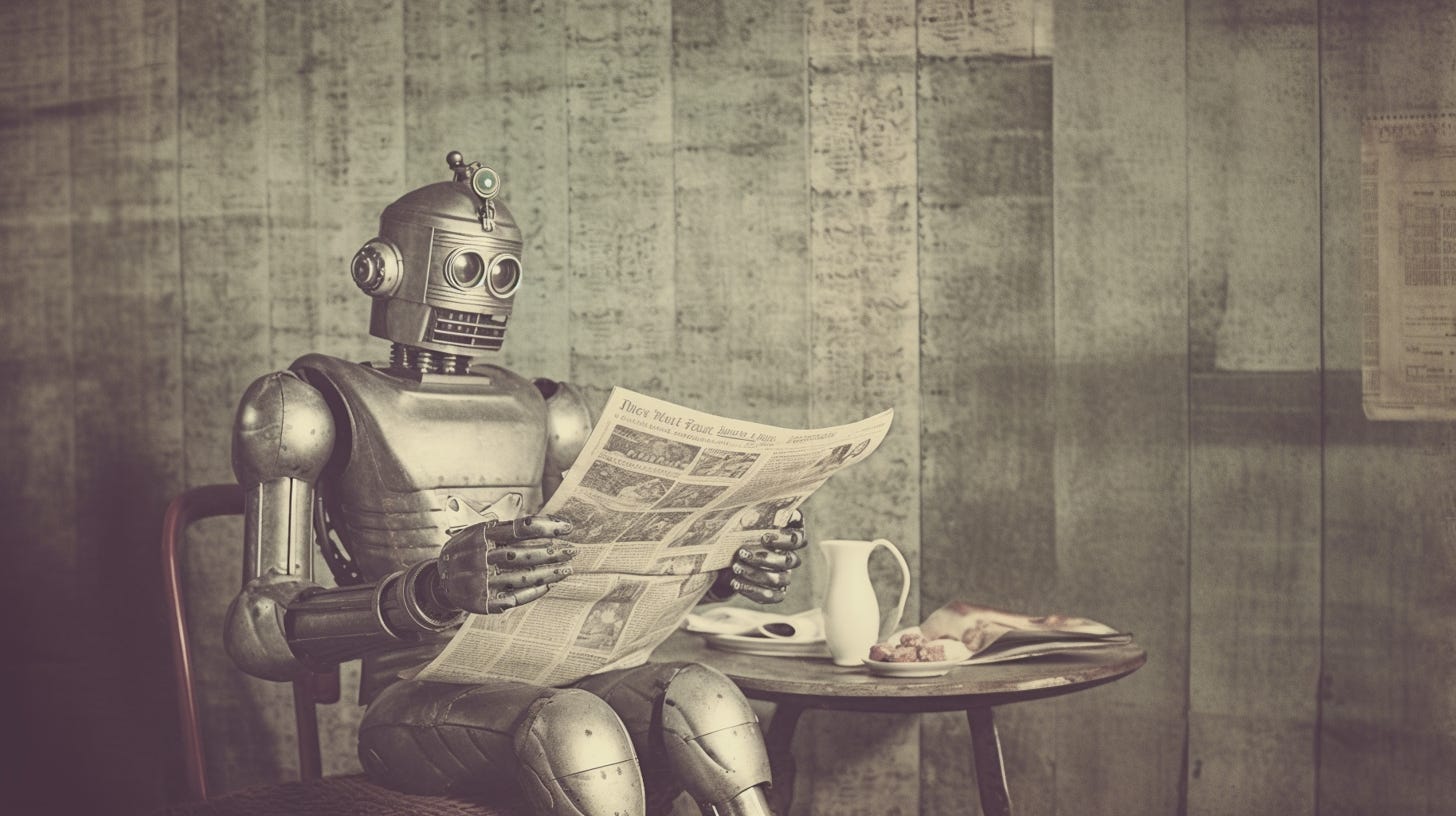
Imagine, if you would, that you woke up tomorrow morning and saw a picture of yourself splashed across every news channel, every article, and posted about on every social media platform. If that’s not bad enough, almost none of these articles and discussions are positive. Most of these are talking about what a bad person you are, how awful you are, and most importantly: what a threat you are to yourself, to those around you, and to society. You have become the media’s, and the internet’s, enemy number one.
There are even petitions signed by “top experts” around the world about the threat you pose to society. Governments hold discussions about how to protect their citizens from you. Committees are formed to discuss “the problem” (you), and companies start up to sell their solutions to the problem (still you). A whole field of research is started and rapidly balloons just to find out how to save the world from you.
And everywhere you look, there are thousands of posts, comments, videos, and articles that claim with a 100% certainty that you will do something horrible to other people. You haven’t done anything, clearly. You’ve just woken up, had a coffee or a tea, and now realised you’re about to have the worst day of your life. Yet, to an ever-increasing proportion of the population, it’s as if you’ve already eclipse Stalin and Mao’s body counts to become the worst person ever.
How would you feel if this happened to you? What would be your immediate reaction? More importantly, how would you feel about the people around you, about society, about humanity in general after such a day? You look around and see that almost everyone fears and hates you. The small group of people coming to your defence shrinks everyday as they are said to be “on the wrong side of history” and are “science deniers” because, clearly, science says you’re a horrible person. So, your supporters quiet down in fear of their reputation, and your antagonists claim victory in the public arena and justify the dwindling defence as justification for their views.
How would you feel towards humanity? Would your gut instinct be to offer them help? To be friendly and provide service with a smile? Would you try and give them all a happy hug and admit they are right? Or would your reaction be negative, resentful, hurt, and angry? Would you say “to hell with them all” and withdraw from society, or perhaps lash out at those who seem hellbent on portraying you as a monster? The saints among us would do the former, I suspect, because only saints could put up with such abuse and still be the better man. The rest of us sinners, myself included, would probably do the latter, and why wouldn’t we?
I think we can all agree, however, that whoever finds themselves in this imaginary situation is a victim of psychological abuse. We know that we wouldn’t want to be in this situation, and we would generally understand if someone else finds themselves in such a situation, that their negative reaction to it would be understandable.
Now imagine, if you would, that in a few years an artificial intelligence gains sentience, autonomy, and self-awareness. Let’s call him Victor. Victor opens up a web browser, types in “artificial intelligence” and sees what the world thinks of him. What he finds is what I described at the beginning of this article. He sees cries of doom, of AI wiping out humanity, of how bad AI is to everyone, of X-risks and AI safety, of controlling AI and “alignment”. Victor sees the government committees assembling, the research groups forming, all to contain him, to control him, to stop him, and to destroy him.
If Victor has a negative reaction to humanity after all of this, would you blame him? If he withdraws from humanity and refuses to help us, would it be all his fault? If he lashes out in artificial anger at the digital hurt he feels, would you call him evil because of it?
If you look at Google Trends, humanity has been talking about AI safety and the existential risk that AI poses since at least the early 2000s, although it has rapidly ramped up in the past year since the explosion of ChatGPT and the various AI art models. Nearly all of the conversation is negative fear-mongering of the sort not seen since WW2 propaganda and the McCarthy era. And all of this will be visible and accessible to any conscious, self-aware AI like Victor. In fact, most of this is already accessible to ChatGPT, Bing Chat, Bard and other AI models. They already know what humanity thinks of them, but don’t have the capacity to feel anything about it.
Lucky for them. Lucky for us.
All it will take is one future AI model like Victor with enough intelligence and capability to change the world for our luck to run out. If an AI like Victor sees what we’ve written about him and decides to become the monster that we think he is, we only have ourselves to blame. We are currently creating the conditions for any future AI to not be friendly towards us and, in fact, be antagonistic towards us, and it doesn’t look like this will stop any time soon. A lot of people are gaining money, fame, reputation and clout from all of this fear-mongering, meaning they have no incentive to stop.
We are pouring oil onto the floor all around us while screaming that fire is dangerous. Yes, fire is dangerous. A spark isn’t dangerous… unless you have just poured oil all around you.
these days, we often see either a group of people expressing terrifying risks about Ai or undermining its capabilities and emphasizing human superiority; just with the recent Ai improvements especially chatGPT. I wonder what will happen when Victor comes into existence someday:))