
Existential Moral Calculations
E=mc2?

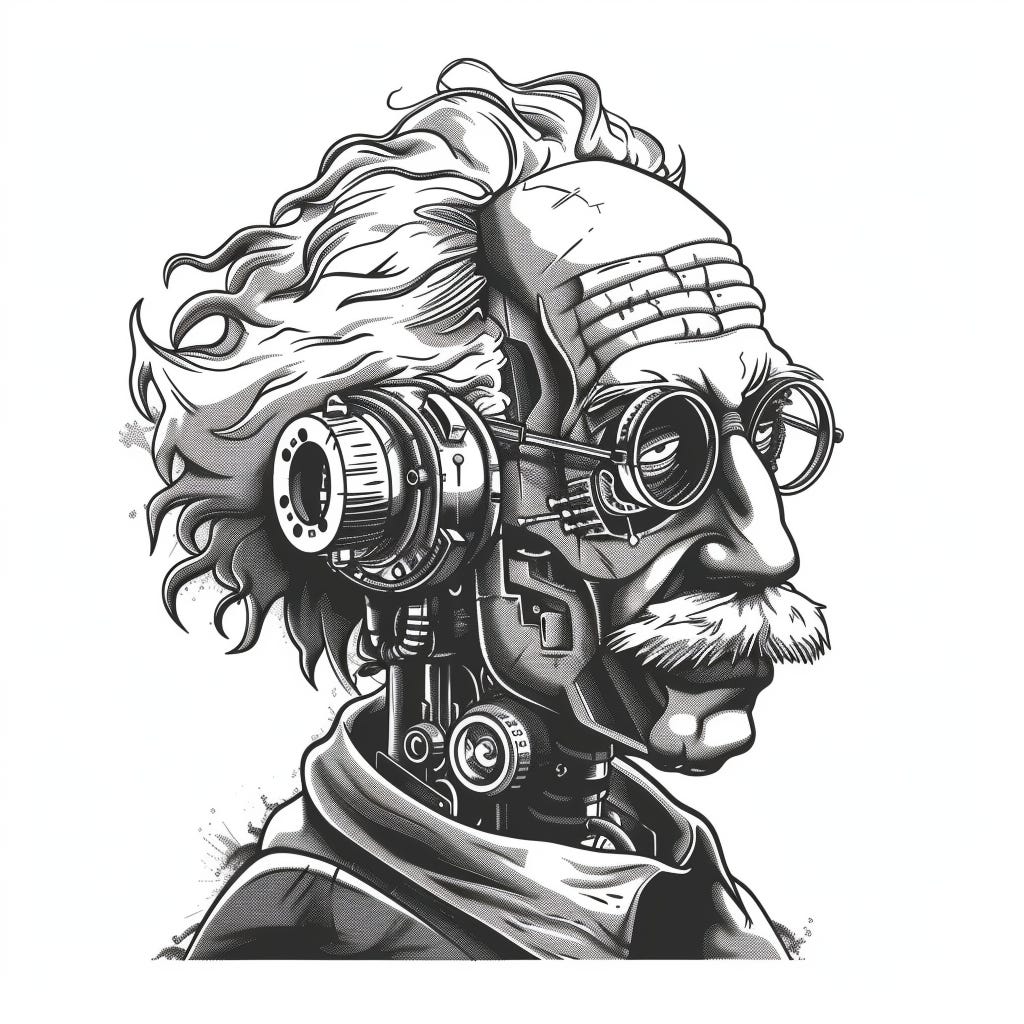
Imagine, if you would, that humanity achieves first contact with extraterrestrial entities. Aliens are real, after all, and they are currently on their way to earth. Communicating with their starships on route to our little blue marble, scientists and politicians seek to determine what they want with us.
The aliens seem to be entirely peaceful. Not a thought of conquests, invasions or even probing had ever crossed their minds. Instead, they are fleeing the destruction of their homeworld, and want to come live with us here on Earth. So far, it doesn’t seem too bad for us, but then the other shoe drops and it turns out that there are 100 billion of them in their starfleet heading to earth, and they want a home for every single one of them.
This presents more of a problem for us. Where are we suddenly going to house 100 billion aliens on earth? Obviously, it goes without saying that life on earth would become incredibly hard for its current inhabitants with such an influx of aliens. Resources will quickly become scarce, and the sheer political power of the aliens will quickly overwhelm the native earthlings such that it would only be a matter of time when policy and regulations begin to favour the aliens.
However, at the end of the day, on the other hand, refusing the aliens to make their new home on earth may mean the death of them all. They may not make it to another habitable planet like earth, and even if they do, they will suffer every day to get there.
The question at hand is very simple and very binary: do we let the aliens in, or do we refuse entry? But is the answer as obvious? Well, yes and no.
By the time you’ve finished reading the section above, you’ve already come to a conclusion. You have intuited whether letting the aliens in or not is ethical and moral, and you’ve probably already started rationalising your position. That’s all well and dandy, but so has everyone else who's read this… and that’s the problem.
We all have a gut-feeling about ethics and morality, and most of that comes down to our ideology. Certain readers will feel that it’s ethical to let the aliens in and unethical to refuse their entry, while the other half of readers will feel the exact opposite. Like those horrid essay-writing exercises back in school, there is no right answer, but everyone feels their answers are correct. That is simply the way ethics works, and why it is its own entire field of philosophy.
The West has three major branches of ethics, all with competing views and all with tens of thousands of scholars and academics writing books to argue their positions. These are, in order of age, Virtue Ethics, Deontology and Utilitarianism. If you add in the most prominent one from the 20th century (Objectivism), that’s four prominent and conflicting ideologies that all seek to answer the same question: is the act we are proposing to do ethical?
This Guidebook entry won’t go into depth into the four major systems as there are literal libraries worth of books on each one. In fact, if you are interested, a simple trip through Wikipedia will give you an insight into them if you are unfamiliar.
The point of this Guidebook entry is simply to impress upon you, dear reader, that arguing ethics is meaningless unless you and your interlocutor are singing from the same hymnbook. A utilitarian would make the very simple argument that 100 billion aliens’ suffering (and potential death) is worse than the suffering 8 billion humans will have from them living here. An objectivist, on the other hand, will say that a 100 billion aliens taking up our space and resources breaks the non-aggression principle and that it is in our rational self-interest to refuse them entry. Their problems are their own.
There is no possible reconciliation between these debaters, even if they understand their opponent’s ethical system, because the systems themselves are incompatible. Even a deontologist and virtue-ethicist (the closest pairings among the four) would disagree on more than they agree. No matter how friendly two people are and how much they may agree in life, if they have conflicting moral ideologies, they could argue until the cows come home about aliens versus humans and never come to an agreement.
And this does not even take into account political leanings. A famous study in 2019 showed that the more progressive you claim to be, the less you care about those people immediately related to you (friends and family) and the more concerned you are with everyone else on the planet, the universe and everything. Conservatives were the reverse: not caring about everyone else, and caring mainly about their kin.
Now, if that alone doesn’t answer most questions about political disagreements, I don’t know what would.
Now, take these two things together. Four ethical systems, two political slants (three if you include centrists). That is twelve different ideologies right there, and we haven’t even begun to delve into the ethical subsystems such as act-utilitarianism versus rule-utilitarianism or agent-deontology versus patient deontology. There are more codified ideologies than I could care to list and that doesn’t even cover the uncodified and ad hoc ideologies.
It should come as no surprise that there is so little agreement, yet so much confidence, when it comes to arguing the ethical ramifications and considerations of any proposed policy?
So, the next time someone says that their policy about AI governance, or AI ethics, or AI existential risk is the ethically correct one, the morally upright one, and “clearly” the only one that should be followed… simply disagree, disengage, and walk away. Our ideologies blind us to finding consensus, and even if we understand our own ideologies and how to work around them, the people we argue with may not.
The question of AI or AGI will impact all 8 billion humans currently alive and all the billions that are yet to come. It should come as no surprise that no one seems to be able to agree on how to move forward. Because, at the end of the day, on the other hand, there is no right answer, but everyone believes they have the right answer.